Diabetes in Cats: Which Insulin Syringe and How to Dose Correctly
Diabetes in cats — choosing the right U-40 insulin syringe, drawing the dose cleanly, sterile technique and safe disposal. A complete UK practical guide.
By Daisy Lin
Medical Writer • Reviewed April 27, 2026
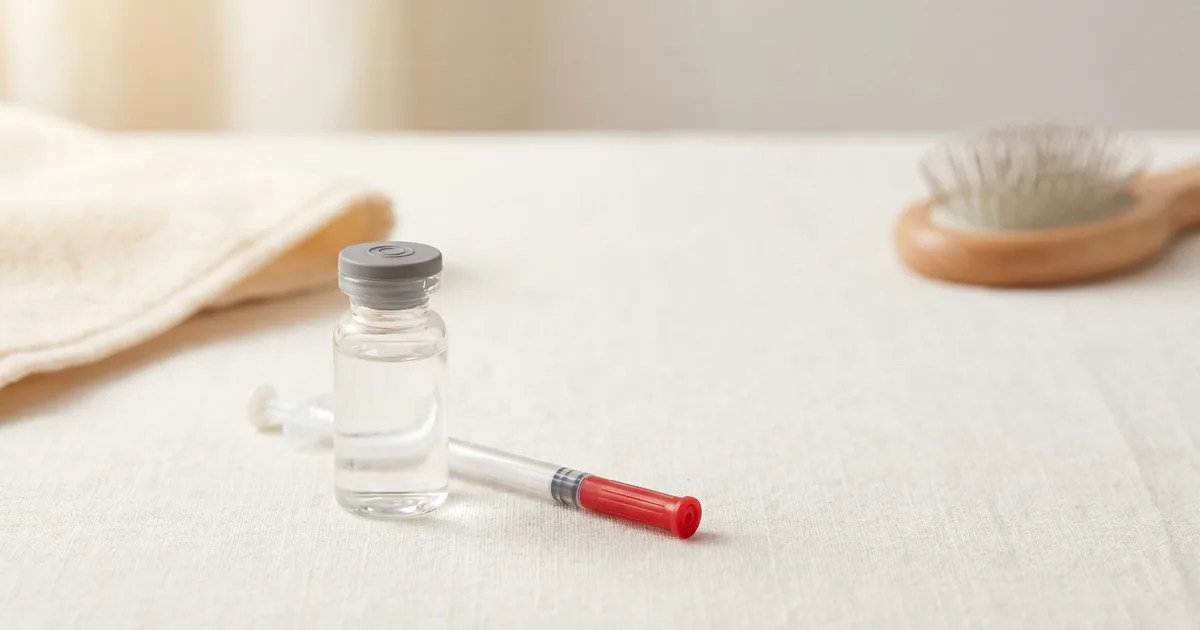
For a diabetic cat you need a U-40 insulin syringe — not the U-100 sold for human use. Veterinary insulins like Caninsulin (Vetsulin) and Prozinc are U-40 (40 units per millilitre), and only a U-40 syringe delivers the prescribed dose accurately. The practical sizes are 0.3 mL for daily totals under 12 units and 0.5 mL as the all-rounder. Picking the right syringe is the single most important decision in home insulin therapy for cats — everything else builds on it.
This guide is for owners of a freshly diagnosed diabetic cat. The good news: well-controlled cats live for years, and some go into remission. The harder news: that depends on getting the supplies and technique right. Below are the three places owners trip up most — choosing the syringe, drawing the dose, and safe disposal — written as a practical playbook to memorise in the first week.
The most important decision: U-40, not U-100
The most common serious mistake in home cat insulin therapy has nothing to do with the dose your vet prescribed. It happens when you buy the syringe.
Veterinary insulins like Caninsulin (Vetsulin internationally) and Prozinc are U-40 insulins. That means one millilitre contains 40 units of active ingredient. Human insulins — Lantus, Levemir, Humalog, all the standard pens and cartridges — are U-100, or 100 units per millilitre. A U-40 syringe is calibrated to U-40. A U-100 syringe is calibrated to U-100.
If you draw "three units" on a U-100 syringe from a U-40 vial, you give your cat 2.5 times the prescribed dose. For a cat normally on three units, that is 7.5 units — enough for severe hypoglycaemia, an emergency vet visit, and in the worst case a seizure with lasting neurological consequences.
The rule is simple and admits no flexibility: scale on the syringe = scale on the vial. Both must say U-40. If the syringe says U-100, it does not belong in the drawer next to the Caninsulin. Period.
A converted dose (1 U-40 unit = 0.025 mL = 2.5 marks on a 1 mL U-100 syringe) is solvable on paper but a real-world error trap that will eventually catch you. Vets explicitly recommend against it. The £2 extra for the right syringe is the most reliable insurance you can buy.
Which volume for which cat?
Once the scale is right, syringe size is next. Three rules of thumb:
- Daily dose up to 12 units (so up to 6 units per injection, twice daily): the 0.3 mL U-40 micro-dose syringe is the most accurate choice. On a 0.3 mL scale, two units is a clearly visible mark.
- Daily dose 12 to 25 units: the 0.5 mL U-40 syringe is the all-rounder for most cats.
- Daily dose over 25 units: the 1 mL U-40 syringe. For cats this is rare — talk to your vet about whether the insulin choice still fits before increasing the volume.
The needles are sized for subcutaneous scruff injection: 29G × 12.7 mm on the 0.5 and 1 mL, 30G × 8 mm on the micro-dose. Both pass through a skin fold without noticeable pain.
Drawing the dose cleanly
- Wash your hands; wipe the work surface with an alcohol pad. Not hospital standard, but any contamination of the syringe is contamination of the vial on the next draw.
- Roll the insulin vial between your palms, do not shake. Caninsulin is a suspension — the small crystals need to be evenly distributed, but you do not want foam. Ten gentle rolls is plenty.
- Wipe the rubber stopper briefly with an alcohol pad and let it dry for two seconds.
- Draw the prescribed number of units of air into the syringe, push the needle through the stopper, and inject the air into the vial. This equalises the negative pressure that otherwise makes withdrawal awkward.
- Invert the vial and overdraw slightly past the prescribed dose, then tap any bubbles to the top and push back down to the exact dose. Read at the end of the black plunger — not at the tip.
- Pull the syringe straight out of the vial, replace the cap, use immediately. Do not store a drawn dose.
The injection itself
Most cats handle the injection surprisingly calmly if the owner stays calm. A working routine:
- Favourite spot, favourite person, same time of day. Ideally just after the meal — that also locks the insulin-glucose timing.
- Lift a skin fold at the scruff or on the side of the chest. Do not always use the same spot; rotate between three or four points to avoid irritation.
- Needle in at a 45° angle into the fold, push the plunger evenly, withdraw straight.
- No rubbing afterwards, no "checking" the injection site with a finger — you only spread the insulin unevenly.
If the cat twitches or a drop of insulin shows on the fur, do not redose. A small underdose is always safer than an accidental double dose. Note it and discuss at the next vet appointment.
Sterile technique in everyday use
Home insulin therapy does not need OR standards, but three points are non-negotiable:
- One syringe, one use. Even if the needle looks clean, it bends microscopically on the first skin pass — the second injection hurts more and creates micro-trauma.
- Insulin in the fridge, not in the door. Constant 2–8 °C, protected from light, never frozen. An opened Caninsulin vial lasts 28 to 42 days depending on the manufacturer — write the open date on the label with a marker.
- Alcohol pads for the stopper, not the cat's skin. Skin disinfection before pet injections is not required and only chills the spot uncomfortably. The vial stopper is what needs the wipe before each draw — we ship alcohol prep pads in 100-packs.
Safe disposal: the forgotten detail
A used insulin syringe is clinical waste. Loose in household refuse it endangers refuse workers, children, and curious animals. The simplest answer is also the cheapest: a sharps container on the windowsill, with every used syringe dropped in immediately after use. Full containers go to your pharmacy, your vet, or a local hazardous-waste point. UK home users can usually request collection through their council; in the EU, pharmacies are the default drop-off.
We carry sharps containers in 0.5 and 1 L. For a cat on two daily injections, a 1 L container lasts about nine months. To bundle it: the diabetic cat care bundle ships 100 syringes, 200 alcohol pads and a 1 L sharps container as a monthly subscription — about six weeks of therapy, auto-replenished.
When to call the vet immediately
Three situations always justify an emergency call:
- Suspected hypoglycaemia: cat seems weak, wobbly, lethargic, or seizing. Rub a tablespoon of honey or glucose syrup into the gums and head to the clinic immediately.
- Accidental double dose or U-100/U-40 mix-up: do not wait — call. The vet decides whether to feed at home or come straight in.
- Vomiting or food refusal after an insulin dose: the insulin is acting but the fuel is missing — hypoglycaemia risk rises fast.
FAQ
What syringe do I use for Caninsulin? A U-40 insulin syringe, typically 0.3 mL for daily totals under 12 units or 0.5 mL for medium doses. Caninsulin is U-40 — a U-100 syringe would dose 2.5× incorrectly.
How often does a diabetic cat need insulin? Standard is two injections daily about 12 hours apart, ideally just after meals. Your vet sets the specific schedule.
Can I reuse a syringe if the needle still looks clean? No. The needle bends microscopically on the first skin pass — reuse hurts more and raises infection risk.
Where do I dispose of used insulin syringes in the UK? In a compliant sharps container, dropped at a pharmacy, vet, or local council collection. Loose in household waste is not permitted under the Hazardous Waste Regulations.
What do I do if I suspect hypoglycaemia? Rub a tablespoon of honey or glucose syrup into the gums and go to the clinic immediately. Do not wait.
How long does an opened Caninsulin vial last? 28 to 42 days from first puncture depending on the manufacturer, kept refrigerated. Write the open date on the label — it is the easiest detail to forget.
Diabetes in cats is treatable, sometimes reversible. What it takes is routine, the right supplies, and awareness of the two or three places where mistakes are not forgiving. The most important of those — U-40 instead of U-100 — costs nothing more than a moment of attention at order time.
Sources
- MSD Animal Health, Caninsulin (Vetsulin) summary of product characteristics — msd-animal-health.com
- Boehringer Ingelheim, ProZinc (protamine zinc recombinant human insulin) prescribing information — boehringer-ingelheim.com
- American Animal Hospital Association, AAHA Diabetes Management Guidelines for Dogs and Cats — aaha.org
- International Society of Feline Medicine, ISFM Consensus Guidelines on the Practical Management of Diabetes Mellitus in Cats — icatcare.org
- UK Veterinary Medicines Directorate, Authorised veterinary medicines — gov.uk
- BSAVA Small Animal Formulary, Insulin — bsava.com
- World Small Animal Veterinary Association, Diabetes Mellitus guidelines — wsava.org
This article is general information and is not a substitute for veterinary advice. Always consult your vet before changing an insulin dose.
Frequently asked questions
What syringe do I use for Caninsulin? +
A U-40 insulin syringe, typically 0.3 mL for daily totals under 12 units or 0.5 mL for medium doses. Caninsulin is U-40 — a U-100 syringe would dose 2.5× incorrectly.
How often does a diabetic cat need insulin? +
Standard is two injections daily about 12 hours apart, ideally just after meals. Your vet sets the specific schedule.
Can I reuse a syringe if the needle still looks clean? +
No. The needle bends microscopically on the first skin pass — reuse hurts more and raises infection risk.
Where do I dispose of used insulin syringes in the UK? +
In a compliant sharps container, dropped at a pharmacy, vet, or local council collection. Loose in household waste is not permitted under the Hazardous Waste Regulations.
What do I do if I suspect hypoglycaemia? +
Rub a tablespoon of honey or glucose syrup into the gums and go to the clinic immediately. Do not wait.
How long does an opened Caninsulin vial last? +
28 to 42 days from first puncture depending on the manufacturer, kept refrigerated. Write the open date on the label — it is the easiest detail to forget.
Diabetes in cats is treatable, sometimes reversible. What it takes is routine, the right supplies, and awareness of the two or three places where mistakes are not forgiving. The most important of those — U-40 instead of U-100 — costs nothing more than a moment of attention at order time.
Related reading
U-100 vs U-40 Insulin Syringes: Why Pets Need a Different Scale
U-40 vs U-100 insulin syringes explained — why veterinary insulin uses a different scale, why mixing them up is dangerous, and how to pick the right one.
Sol-Vet vs BD vs MSD: U-40 Vet Insulin Syringe Comparison 2026
Sol-Vet vs BD UltraFine Vet vs MSD Caninsulin syringes 2026 — pricing, UK and EU availability, shipping reliability, and the EU-warehouse alternative.
Insulin Storage and Travel: Fridge, Flights, Heat and the 28-Day Rule
What the EMA SmPCs actually specify for in-use insulin storage, what UK and EU airlines allow in cabin baggage, and what the 28-day rule does and doesn't mean.
Get your supplies
CE-marked syringes and alcohol prep pads. Shipped from Spain across the EU and UK.